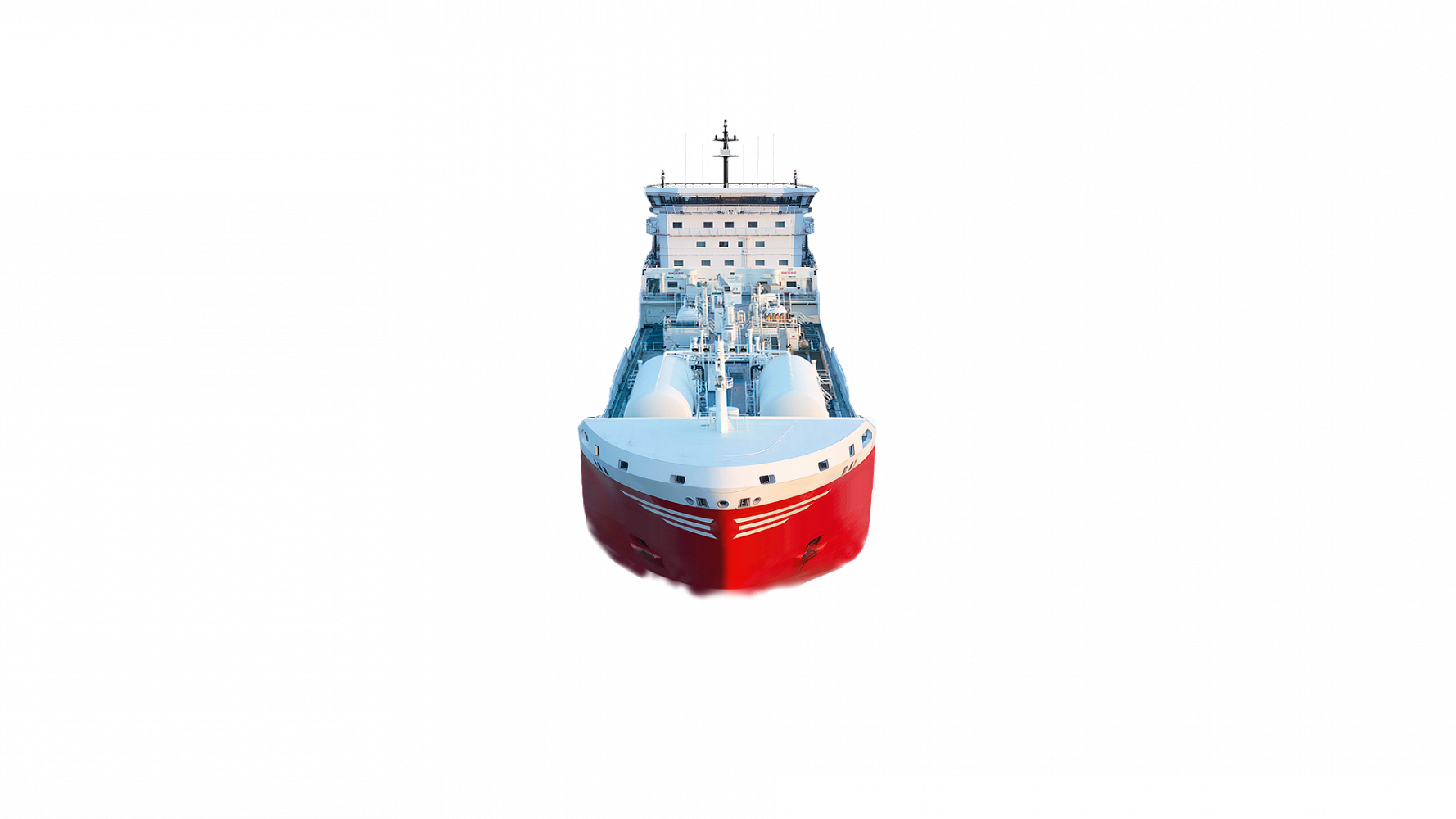
Traditions Innovations Experience
About us
CNIIMF TODAY
Established in 1929, the Central Marine Research and Design Institute (CNIIMF) is the leading scientific organization of the Russian Federation in the field of maritime transport.
Today, CNIIMF’s research activities cover the full life cycle of the key assets of maritime and inland waterway transport infrastructure – including vessels, ports, shipping routes, transshipment equipment, and other facilities.
The Institute's scientific departments are directly involved in planning and forecasting water transport operations, developing concepts and design documentation. They also provide justification and support throughout the operation, modernization, and repair of water transport facilities.
The highly qualified specialists and unique experience in solving complex scientific and technical problems enable CNIIMF to conduct research and design projects in the maritime transport field professionally and efficiently, while also maintaining a positive outlook for the future.
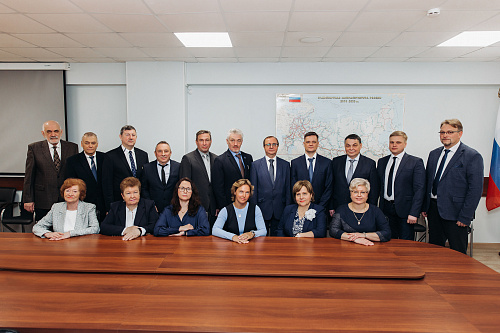
1929-1940
Establishment of a Scientific Base
The joint-stock company Central Marine Research & Design Institute traces its origins back to the State Research Institute of Shipbuilding and Ship Repair, established on 2 March 1929 in Leningrad. Over the course of its history, the Institute has changed its name many times. The legal succession is enshrined in Order No. 40-pr of the Ministry of the Merchant Marine, dated 19 March 1987, and the CNIIMF Charter approved in June 1987.
Under the extremely difficult conditions of the Civil War and the Allied military intervention in Russia (1918–1922), the first measures were taken to involve scientists in the economic construction of the new state and to address urgent scientific and technical challenges of national importance. The scientific foundations for developing the key economic sectors and the transport system began to be developed.
Prolonged military operations in the country brought the maritime and inland waterway sectors to a near-catastrophic state. The surviving merchant fleet and coastal infrastructure were in a deplorable condition. The long and intense war caused enormous damage to the country's water transport across all sea and river basins. This devastation was compounded by the Entente’s military-economic blockade of Russia, which was an integral part of the intervention.
1929-1940
From the very beginning of 1918, despite the overall economic devastation, the step-by-step transformation of the entire water transport industry of the new Russian state began. On 5 February 1918, a decree on the nationalization of the maritime and river fleets was issued, which created the basis for a planned economic system and was aimed at ensuring a monopoly on foreign trade. Soon after, a state monopoly on foreign trade was established, and on 18 June 1918, the largest shipyards were declared public property.
Russia faced the arduous task of restoring and developing its water transport sector. The remaining merchant ships needed major repairs, the fleet had lost its personnel, and every commercial port required urgent restoration.
The main directions for transport reconstruction were defined in 1920 and envisaged significant growth in freight turnover, railway construction and electrification of the most important railway routes, as well as the reconstruction of river transport and expansion of seaport capacity. Following economic revival and sectoral growth, research activities expanded significantly. During that period, despite all the difficulties of the recovery years, the country saw the systematic formation of a state network comprising dozens of specialized research institutions. New large centers emerged, focused on addressing both fundamental and applied economic challenges in all vital sectors.
1929-1940
The establishment of research institutes in the field of maritime transport dates back to January 1929, when a program for transport research was approved under the Soviet Union’s first five-year plan (1928–1932). This program included the formation of specialized transport institutes, particularly an institute for shipbuilding and ship repair.
Soon after, on 26 February 1929, the Central Research Administration was formed within the state body overseeing all transport activities in the Soviet Union and began operations on 1 March 1929. The very next day (2 March 1929), the leading research institution of the industry – the State Research Institute of Shipbuilding and Ship Repair – was established in Leningrad. This day marks the beginning of our Institute's history.
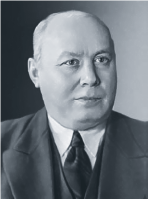
On 12 April 1939, Professor Valentin Pozdyunin (27 November 1883 – 23 May 1948), a prominent Soviet scientist specializing in shipbuilding, hydromechanics, theory of ship design, and ship systems, was appointed director of the Institute.On 9 July 1929, the Scientific Board approved a five-year plan for the Institute's research activities, covering ship construction, operation, and repair. As noted, “the further development of maritime transport becomes possible only with a solid scientific base,” combined with the latest achievements of Soviet and foreign science and technology, as well as the rationalization of the transport industry.
1941-1945
CNIIMF during the Great Patriotic War (World War II)
In the harsh war years, the Central Marine Research and Design Institute provided comprehensive assistance to shipping companies in organizing and developing technologies for the military cargo transportation. It carried out various defense-related tasks, including the development of steel barge designs for the “Road of Life” – the crucial supply route across Lake Ladoga to besieged Leningrad.
From the very beginning of the Great Patriotic War (the Eastern Front of WWII), CNIIMF’s work was totally put on a war footing. Previous developments were mothballed, and the Institute became engaged in fulfilling new tasks dictated by the wartime needs.
As the only research institute at that time with a comprehensive focus on the merchant fleet, ports and ship repair, CNIIMF was involved in solving actual operational and maintenance problems in shipping companies, ports, and basins, and increasingly at the request of various military organizations.
Nevertheless, it was not long before civilian fleet operations became impossible in home waters of the Baltic Sea: both sides of the Gulf of Finland were captured by the enemy, most of the Baltic Shipping Company's vessels were lost, and the remaining ones were either seriously damaged or blocked at the mouth of the Neva River until 1944. Out of the more than 120 steam and motor vessels in the basin at the beginning of the war, only six cargo vessels remained in operation by the end of December 1941. However, the knowledge and experience of the CNIIMF staff were in high demand in other sea basins, where all military transport and economic cargo flows had been relocated. Teams of qualified specialists from the Institute were dispatched to these regions, which were of crucial to the USSR's maritime industry.
1941-1945
A team of mechanics was sent to the North to assist in the installation and operation of new crane equipment received from the Allies. From this direction, through the ports of Murmansk and Arkhangelsk, vital military and economic supplies began to flow into the USSR. Another team from the Institute headed to the Far East to assist the Far Eastern Shipping Company in mastering and commissioning American Liberty ships and turbo-electric vessels received under Lend-Lease.
In 1942, to provide prompt technical assistance to the fleet in the Caspian Sea, an Institute branch consisting of five sectors was organized in Makhachkala, and later in Lankaran. A special electrical and radio engineering laboratory was set up in Baku. The importance of this work was immense: an uninterrupted oil transport corridor in the Caspian Sea supplied fuel to the entire active army, including its armored forces, motor transport, and aviation. Throughout the war, CNIIMF employees were sent from Leningrad to Lankaran to provide prompt, qualified assistance. In Baku, they participated in the construction of two powerful dispatch radiotelephone stations. Special brigades were formed to provide operational and technical support to the Baku port. For employees weakened by hunger, these assignments to the Caspian branch played a lifesaving role.
The specialists who remained in besieged Leningrad continued to work under exceptionally harsh living conditions, demonstrating high patriotism and a sense of civic duty, as urgent defense tasks had to be completed in the shortest possible time.
1941-1945
The Experimental production workshops (EPW) of CNIIMF were transformed into a de facto military factory for the machining of mine casings. During the war, 5,000 mine casings and 1,500 rocket warheads, as well as mine fuses, firearm parts, and anti-aircraft gun components, were manufactured here. On the Institute's initiative, a semi-automatic machine tool for processing mine casings was developed, which was later adopted by several factories in Leningrad. The troops of the Leningrad Front were in dire need of mines, shells, and other ammunition.
A prototype trench periscope, adopted by the Leningrad Front in 1942, was developed according to CNIIMF’s technical specification and produced in tens of thousands of units by the Metallist plant.
In addition, under the direction of Shamarin, the Experimental production workshops manufactured components and parts for warship fuel equipment, as well as a filtration and ventilation unit for the Institute's own bomb shelter. The EPW were also tasked with manufacturing equipment and instruments to fulfill the CNIIMF's thematic plan, implementing specific inventions, carrying out assignments to introduce new technology in shipping companies and ports, and converting engines and installations to low-grade fuels (e.g. wood waste, sod peat, etc.) in order to save liquid fuel for military needs. On the instructions of the Military Councils, the Institute conducted work on converting gasoline engines to run on diesel or a mixture of gasoline and diesel oil.
As various orders came in, the EPW employees were able to quickly retool their machines and independently manufacture all the necessary fixtures and tools. Three departments were formed within the EPW: a machine shop, a gas-producing shop, and an auxiliary production shop. The workday lasted 12 hours, and sometimes even longer.
1941-1945
CNIIMF’s assistance to bread factories, which had stopped working after the power supply was cut off, was extremely urgent for the city's survival. At the request of local industry, CNIIMF manufactured and installed gas-generator electric power units at bread and milk factories, an evacuation hospital, and other premises. Assistance was also provided to the Russian Diesel Engine Plant.
From August 1941, on the initiative of the front command, the formation of labour battalions began in Leningrad and its suburbs. The labour battalions were an important part of the city’s defense system, tasked with guarding factories, plants and institutions. The battalions were manned on a production basis and included personnel who had undergone military training at their respective enterprises and institutions. In December 1942, two rifle sections of a labour batallion were organized from the CNIIMF's employees. These personnel underwent regular military training to study and master the designated strong point, so that to occupy the assigned sector in the Baltic Fleet defense line, if necessary.
CNIIMF employees, together with workers from other Leningrad enterprises and organizations, participated in the construction of the Luga defense line, where troops of the Leningrad Front and the People's Militia Division held back the enemy advance on Leningrad for a month. They also worked on building fortifications on the immediate approaches to the city.
1941-1945
Project for the “Road of Life”
In August 1941, under pressure from Hitler's forces, Leningrad lost its railway arteries to the mainland one after another. On 8 September, when the Nazis captured Shlisselburg –the last port on Lake Ladoga on the Leningrad side – the route from the lake to the Neva River was finally cut off, and the city lost its last waterway connecting it to the rest of the country.
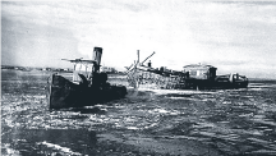
As winter progressed and the ice gained strength, the so-called “Road of Life” was laid across the frozen lake. However, with winter’s end approaching, the threat of losing the only supply route increased. Nothing was ready for mass water transportation across Lake Ladoga. The vessels used during the autumn navigation of 1941 had been wrecked by storms, and many were sunk by enemy aircraft. The tugs and barges that remained afloat were in a deplorable state. According to the Chief of the Rear of the Leningrad Front, Lieutenant General Feofan Lagunov, only 7 out of 29 lake barges were in good condition. All 60 river barges were dilapidated, poorly equipped with cargo securing, and unsuitable for navigating extremely rough autumn waters of Lake Ladoga. Between 11 September and 15 November 1941, more than 20 barges carrying people and food were lost in storms. New and reliable means of transport were urgently needed.
1941-1945
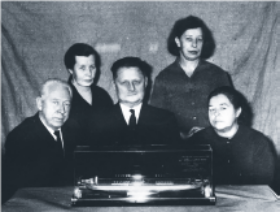
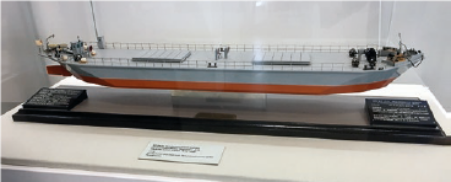
The steel barge design was developed in record time by the design bureau “Morsudoproekt”, which was spun off from the Institute in 1935 and reintegrated into CNIIMF in 1987 by the Order of the Council of Ministers of the USSR. The chief designer during the war was Alexander Osmolovsky, an eminent specialist in shipbuilding with a PhD in Technical Sciences. It was on his initiative that metal dry cargo barges were designed for the “Road of Life”. As early as October 1941, he sent a memorandum to the headquarters of the Leningrad Front with specific proposals: to build new barges in Leningrad in separate sections, which would then be sent by rail to Osinovets, where the finished barges could be assembled on the shore from the delivered sections and parts.
The situation on Lake Ladoga was becoming increasingly difficult. The enemy attempted to disrupt transportation by all available means from the air: in the autumn of 1941, Nazi pilots carried out 127 raids, dropping over a thousand bombs on vessels. The loading and unloading points for watercrafts were also subjected to air strikes. Every barge was of exceptional value in those days. The construction of wooden lake barges had begun in the Volkhovstroy area but ceased when the enemy occupied Tikhvin.
1941-1945
In October 1941, the key requirements of the technical design specification for the planned steel barges were agreed upon, and working drawings were released for a barge with greatly simplified structural elements, adapted for ice navigation on Lake Ladoga. The technical characteristics of the barge allowed it to be operated in the lakes of the country’s North-Western region, with access to the Svir, Neva, and Volkhov rivers, as well as to be used as part of the national defense system for special purposes.
In 1942, shipbuilders in Leningrad faced enormous difficulties: there were shortages of electricity, heat, compressed air, water, and physically strong workers. The walls of the factories were broken by shells, with piles of ice and snow in the gaps. The workshops stood idle for the long winter months due to lack of electricity. Therefore, even though the design of the barges had been simplified to the greatest possible extent, the factory workers demanded further simplifications. Some of the work, such as bending the framing and hull plates, simply could not be done, since before the war, bending was done manually with sledgehammers, and it became impossible for the people exhausted by the siege. The factories' demands were fair, and the drawings were adjusted without changing the main, already agreed type, dimensions, and design of the barge. One of the variants developed at the initial design stage was taken as the basis.
1941-1945
Faceted flat hull lines were proposed for the bilge and end sections. This original solution largely determined the success of the mass construction of barges for the “Road of Life”. However, Baltic shipbuilders went further – they replaced facets with wedges, which further simplified the construction of barges, bringing the total number of the built barges to 15. Thus, 5 were built at the Zhdanov Shipyard, 3 at the Admiralty Shipyard, and 7 at the Baltic Shipyard.
It should also be remembered that building ready-made barges at Leningrad shipyards was pointless: the Nazis controlled the left bank of the Neva River from its source to the Ivanovo Rapids, and no barge could be transported up the river to Lake Ladoga. The only solution was to weld the barges directly on the shore of the lake from small hull sections delivered by rail. There was only frozen, bare ground – no electricity, no buildings, and no infrastructure. Everything had to be created from scratch.
For this purpose, it was necessary to build slipways and launching devices for barge assembly in Goltsman Bay, one and a half kilometers from Osinovets. During the siege of Leningrad, this harbour was part of the Osinovets port. In early April 1942, a freight train arrived at Ladoga carrying workers from the 16th construction trust. The builders, mainly women, some with infants, lived on the shore of Lake Ladoga – in unheated huts during winter and in army tents in spring and summer. A total of about 300 people worked under unimaginable conditions to build the slipways and launching devices. Women and teenagers, together with very few men, would break up the frozen ground, hard as cast iron, using crowbars, and laid primitive slipways. The builders were not given any special rations, since there was nowhere to get them from.
1941-1945
Then the three main Leningrad shipbuilding yards – the Baltic, Admiralty, and Zhdanov shipyards – sent the first sets of sections and parts there, along with workers, foremen, and builders. The Zhdanov Shipyard, for example, sent 15–20 electric welders, which represented the plant’s entire remaining workforce of this profession. At first, the three shipyards operated as scattered, separate sites, entangled in red tape. There were no unified support services; each plant handled everything independently. But soon, localism was set aside, and the three independent plants in Goltsman Bay were consolidated into a single Ladoga shipyard. The workers, craftsmen, and engineers laboured selflessly for 16-18 hours a day, despite the bombing and immense hardship.
The steel barges designed by “Morsudoproekt” proved highly successful and, in contrast to their wooden counterparts, demonstrated remarkable durability and resilience, withstanding even close bomb explosions. Instead of the designed 600 tons, the barges could easily carry up to 1,000 tons of cargo. Their innovative design ensured high structural strength and resistance to the lake’s steep waves and ice impacts. None of the completed barges were severely damaged by ice or storm waves. Even 25 years after their construction, some of the barges continued to operate on Lake Ladoga.
Fulfilling the frontline order for steel barges was a joint labour feat of designers, shipbuilders, and the unknown Leningrad construction workers of the temporary Ladoga shipyard. On 16 June 1942, a group of “Morsudoproekt” employees was awarded the ”Honorary Worker of the Navy“ badge. The only reminder of the efforts of those who toiled at the temporary shipyard during those harsh days is a modest obelisk on the shore of Goltsman Bay, erected in memory of the builders of the siege fleet.
1946-1954
Fleet restoration and modernization
Following the victorious end of the war, the country faced a difficult transition to peaceful reconstruction, with an urgent need to restore merchant shipping again amid widespread devastation. During the war, the Soviet Union lost a fifth of its working-age population and a third of its national wealth.
The post-war period was marked by frequent organizational changes in the state apparatus: on 15 March 1946, the Ministry of the Maritime Fleet of the USSR was formed; on 15 March 1953, it merged with the Ministry of the River Fleet of the USSR, also incorporating the Main Directorate (General Administration) of the Northern Sea Route. However, as early as 25 August 1954, the administration of the water transport industry was once again divided into separate bodies for the maritime and river fleets.
1946-1954
The main task of the maritime transport industry, set in the first year of the post-war Five-Year Plan, was to increase cargo turnover by 2.2 times by 1950 compared to the pre-war level. The work of the merchant fleet, ports, ship repair yards, and all other organizations had to be subordinated to this goal. The production capacity of the shipbuilding industry, however, could not meet the needs of the Ministry of the Maritime Fleet, and the latter was forced to accept this limitation, as all sectors of the economy were being restored with great difficulty.
In March 1946, the USSR Supreme Soviet adopted the Five-Year Plan for the Restoration and Development of the National Economy for 1946-1950. The primary tasks were the restoration and development of heavy industry and railway transport, ensuring technical progress in all sectors of the national economy and strengthening the country's defense capability. Through enormous efforts, the restoration of a number of industrial sectors was fully completed by 1953. At the same time, a broad program of new industrial and transport construction was implemented.
The war-ravaged country was once again forced to rebuild its merchant fleet and the coastal infrastructure of the maritime industry from scratch. During World War II, the Soviet merchant marine lost nearly half of its pre-war tonnage. To some extent, captured vessels compensated for the losses, but the majority of those were outdated. Most of the vessels that survived the war required repairs.
1946-1954
Around 43% of the mooring front, 54% of warehouses, and 47% of the transshipment equipment were either lost or rendered inoperable. Ship repair plants and workshops in Odessa, Tallinn, Riga, Leningrad, and other cities – a total of 123 enterprises – were completely or partially destroyed. Losses among qualified personnel were heavy, and the training of specialists at higher and secondary maritime educational institutions sharply declined. Shipbuilding and repair yards in maritime cities that had escaped destruction were urgently engaged in repairing the remaining fleet.
By the start of the post-war Five-Year-Plan, CNIIMF was operating under relatively normal conditions for scientific and production activities, thanks to the extensive restoration work carried out by the employees themselves. Despite material shortages immediately after the war, by 1946 major repairs had been completed on the water supply and sewerage systems, window glazing of the premises, and urgent repairs of the auxiliary workshops, the canteen, and the telephone exchange. Living conditions of the employees also improved somewhat, thanks to the monetary reform and the abolition of ration cards for food and industrial goods in December 1947. The Institute numbered about 200 people on staff and 10 research and production departments and laboratories, with plans to increase their number in response to growing tasks. To mark the 15th anniversary of the Institute, an information booklet entitled “CNIIMF – 15 Years of Activity” was published.
1946-1954
Research activities at that time focused on projects that would provide direct benefits to the existing maritime fleet, and included the following:
- Improving the technical operation and modernization of ship machinery at shipping companies
- Feasibility studies on new ship types
- Development of new rules and operational instructions for the fleet and ports
- Mechanization of solid fuel combustion and automation of ship machinery control
- Investigation and prevention of premature wear and damage to the ship hulls and installations
- Development and implementation of specialized radio equipment for the maritime fleet
- Development of hull strength and ship stability standards
- Development of efficient technical processes and methods for organizing transshipment operations, etc.
In 1946, on the occasion of CNIIMF’s 15th anniversary, 13 employees were awarded the “Honorary Worker of the Maritime Fleet” badge, 12 were awarded a Certificate of Merit from the Ministry of the Maritime Fleet, 8 received a month's salary, and 10 were given coupons for the woolen fabric from the Ministry’s funds. In the post-war years, when there was still an acute shortage of everyday necessities, it was common practice to reward the best workers with vouchers for fabric, ready-made clothing, and footwear.
1946-1954
The Minister of the Merchant Marine approved the composition of/appointed the Scientific Board of CNIIMF, consisting of 39 people (18 of whom held the professor title) and headed by the Deputy Minister Viktor Bakaev.
In October 1946, a merchant marine ship design group was formed at CNIIMF under the leadership of designer Alexander Osmolovsky.
In March 1947, on the initiative and with the participation of CNIIMF, an All-Union Conference on Port Mechanization was held. The forum, a major event for port workers, was attended by over 200 delegates from 87 interested organizations across the country, including 19 seaports. For the first time, the conference discussed issues related to the implementation of the Five-Year Plan for the restoration and modernization of the maritime fleet, the introduction of new technology, the acceleration of ship handling, and adopted decisions to improve the mechanization of transshipment operations in water transport.
In 1952, the scientific sectors of the Institute were renamed departments, resulting a total of 12 scientific and production departments and 4 laboratories with a departmental status. According to the manning schedule, the scientific and technical staff of the departments and laboratories numbered 170 people, and the service staff numbered 85 people. In total, excluding employees of the experimental workshops and peripheral stations, 255 people worked at CNIIMF.
In June 1953, an order was issued by the Minister of the Maritime and River Fleet Zosima Shashkov on the merger of the maritime and river research institutes into a single Central Research Institute for Fleet Construction and Operation. Boris Arefiev was appointed director.
1946-1954
In September 1944, “Morsudoproekt” – an independent design institution that was spun off from and later reintegrated into CNIIMF – resumed its activities in Leningrad. Its main task was to develop projects for the restoration and modernization of transport and auxiliary fleet vessels.
The designers of the Leningrad bureau worked on numerous restoration and modernization projects for passenger and cargo vessels, including the steamers “Soviet Union”, “Asia”, “Admiral Nakhimov”, “Lensovet”, “Alexander Mozhaisky”, “Kooperacia”, “Vologda”, the turboelectric passenger ship “Abkhazia”, and others. The bureau also developed a series of tugs with capacities ranging from 150 to 1,200 hp, as well as coastal vessels, which were built in large series.
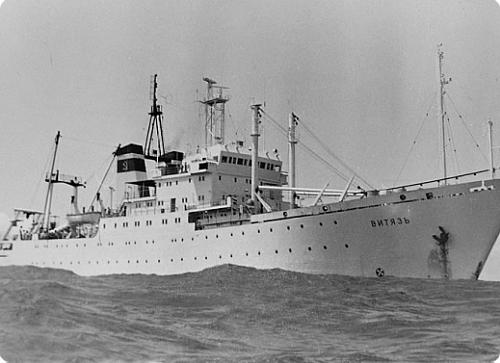
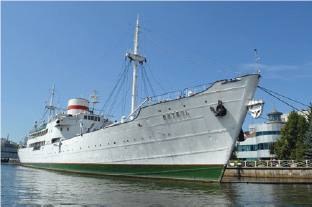
In 1947, “Morsudoproekt” developed the design for outfitting the “Vityaz”, the first large research vessel in the Soviet Union, which was acquired as a war reparation and incorporated into the USSR's civilian fleet. From 1949 onward, during the vessel's expeditions, a significant amount of important scientific research was conducted, and numerous discoveries were made. For these achievements, a group of scientists and the head of the outfitting design project were awarded the State Prize in 1951. This project subsequently served as a prototype for many later Soviet research vessels. In 1979, the “Vityaz” completed its last research expedition.
1946-1954
The research vessel “Vityaz” is a legendary ship in the history of oceanography, which made an outstanding contribution to the exploration of the World Ocean. Flying the flag of the USSR Academy of Sciences, the vessel undertook 65 scientific voyages, covering about 800,000 miles. From its board, the maximum depth (11,022 m) in the Mariana Trench was measured. The research conducted by the “Vityaz” eliminated many “blank spots” on the underwater relief maps of the Pacific and Indian Oceans. The “Vityaz” gave rise to the Russian school of oceanography, engaging scientists from 50 research institutes in the USSR and 20 countries around the world in its expeditions. The “Vityaz” served as the foundation for the Museum of the World Ocean in Kaliningrad and remains the centerpiece of its collection and the highlight of Russia's only Fleet History Embankment. The vessel houses exhibitions devoted to the history of navigation and geographical discoveries.
Between 1951 and 1955, more advanced vessels appeared; their number increased and quality improved. The tonnage of fleet deliveries increased more than 4.65 times compared to the previous five-year period. At that time, CNIIMF developed a long-term master plan for maritime transport development, as well as a five-year plan for the maritime fleet for 1951-1955. Feasibility studies were carried out for a range of transport vessel types to be built. The period of post-war reconstruction came to an end, and the country faced new and urgent creative challenges.
1955-1970
Fleet Development and Improvement
In the history of the Soviet fleet development, the period from 1955 to 1970 is characterized by intensive fleet expansion through the construction of large ship series, which ensured rapid tonnage growth at minimal cost. In terms of quality and innovation, the newly built fleet initially differed little from the existing tonnage.
On 2 December 1955, the Ministry of the Maritime Fleet issued Order No. 475 “On measures to improve the work of the Central Research and Design Institute”. Thus, the Institute’s primary mission became the conduct of research on technical progress and the development of maritime transport. To this end, all available resources were directed towards comprehensive research in the following areas: economics and operation of the fleet, ports, and factories; technical operation of the fleet and ports; creation of a new and modernization of the existing fleet; and improvement of ship repair organization and technology.
1955-1970
The organizational structure of CNIIMF was established by order of the Ministry of the Maritime Fleet and included the following departments:
- Maritime transport economics
- Fleet and port operations
- Shipbuilding and fleet modernization
- Ship power plants
- Ship repair
- Navigation and communications
- Technology and mechanization of cargo handling
- Port facilities and sea routes
- Special works
- Scientific and technical information, editorial and publishing.
1955-1970
Research stations were operating in the ports of Vladivostok, Baku, Odessa, and Murmansk. In early 1958, the Far Eastern branch of the Institute was established, which subsequently transformed into an independent multidisciplinary centre – the Far Eastern Research, Design, Survey, and Design and Technology Institute of the Maritime Fleet (commonly known as “DNIIMF” or “FEMRI”).
In September 1956, CNIIMF was tasked with overseeing the development of preliminary ship designs for the Ministry of the Maritime Fleet. It was also during this period that the Institute established its first international contacts with specialists from socialist countries. In March 1958, CNIIMF successfully completed an urgent assignment to prepare legal materials on the open sea regime, which were necessary for the work of the Soviet delegation at the international conference on maritime law in Geneva.
In October 1959, by order of the Ministry of the Maritime Fleet, CNIIMF began the important work on developing a long-term development plan for the country's maritime transport for 1959-1980.
The Institute's work underwent significant transformation in July 1960 with the establishment of a new research institute of maritime transport, “Soyuzmorniiproekt”, with branches in Leningrad, Odessa, Baku, and Vladivostok. CNIIMF was obliged to transfer to the new institution its research activities concerning advanced maritime transport development, onshore construction, dredging, and sea routes, along with the Department of Port Facilities and Sea Routes, the Ports Sector of the Economics and Operations Department, the Sochi Wave Research Station, and the Tuapse Wave Measurement Station.
1955-1970
The Department of Port Facilities and Sea Routes was formed within CNIIMF back in 1931. Over 29 years of efficient work, by 1960 it had established the first research station in the USSR on the Black Sea and successfully trained highly qualified personnel – five Candidates and one Doctor of Technical Sciences. As a result of the reorganization, along with the personnel of this department, CNIIMF lost a significant portion of its research work, which was essential for comprehensive coverage of maritime transport issues.
By 1960, CNIIMF had focused on the “fleet-related” issues – primarily developments in advanced ship types, ship machinery, ship operation, and automation – while port and coastal infrastructure research was administratively removed from the Institute’s scope. By Order No. 307Pr of the Ministry of the Maritime Fleet, dated 31 December 1960, the research and development conducted by CNIIMF under the title “Advanced types of maritime transport vessels for 1960-1980s” was declared to be of strategic importance for the industry as a whole.
Meanwhile, with the Institute’s participation, the Fifth Five-Year Plan initiated a rapid, large-scale renewal of the country's cargo, passenger, and auxiliary fleets. The development of heavy industry to support shipbuilding became a significant achievement. Many new vessel types were put into service. Domestic shipyards mastered the construction of modern tankers and a number of specialized dry cargo ships to meet the evolving demand of maritime trade in terms of volume and structure.
The subsequent fleet development resulted in a significant leap in the quantitative and qualitative composition of the merchant fleet. During the Sixth Five-Year Plan (1956-1960), the fleet’s tonnage grew 2.46 times compared to the previous five-year period, and 6.3 times during the Seventh Five-Year Plan (1961-1966). The Soviet fleet began to align with global scientific and technological advances.
1955-1970
Ship dimensions, carrying capacity, cargo hold volumetric capacity, speed (up to 16–20 knots), and power plant capacity (up to 20,000 hp) increased, while crew safety and navigation security were ensured. The 1960s saw large-scale serial construction of timber carriers at various shipyards. For example, between 1963 and 1965 alone, the Okean Shipyard and the Vyborg Shipyard each produced seven timber carriers, while the Severnaya Verf (Northern Shipyard) built ten during that period and another 12 vessels between 1966 and 1968. In addition, 36 timber carriers were delivered from Finnish shipyards between 1962 and 1965. The fleet witnessed similar growth across vessels of other types and purposes.
Serial construction of hydrofoil vessels was initiated to meet the needs of the southern regions; however, these vessels were used across nearly all sea basins of the country and were also built for export.
Milestone events not only for the shipbuilding industry, but for the entire Soviet Union, were the completion and commissioning of the world's first nuclear-powered icebreaker “Lenin” on 11 December 1959. The “Lenin” began its Arctic operations as early as 1960. Later, the rise in nuclear-powered vessels led to the creation of a special scientific department for the nuclear fleet within CNIIMF.
Overall, in the 1960s the scope of CNIIMF’s research and development became significantly more complex, corresponding to the increasingly large-scale and diverse demands of the Soviet maritime transport development. A large share of the research work was devoted to forecasts and long-term prospects for merchant fleet development, design of service and auxiliary vessels and ships for local lines, technical specifications and standards for bulk cargo transportation, and a system of continuous fleet maintenance.
1955-1970
One of the top priorities in the early 1960s in the transport sector and the entire national economy was the widespread introduction of electronic computers. A revolutionary global era of electronics and digital technologies was dawning. In response, CNIIMF initiated the creation of an institute-wide computer technology laboratory, which was equipped with a “Minsk” computer.
The Department of Navigation Technology and Communications began research on the automation of navigation processes using the state-of-the-art computer technology of the time, aiming to create the first navigation computer for the maritime fleet. Simulation of experimental tasks using computers, instead of expensive models, full-scale samples, or physical test benches, became increasingly widespread.
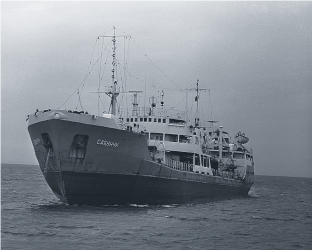
In 1963, the Institute's staff successfully completed work on equipping the power plant of the experimental diesel ship “Inzhener A. Pustoshkin” of the Caspian Shipping Company with comprehensive automation systems. The automated navigation system on the tanker, built at the Oka shipyard in the city of Navashino, Gorky Region, passed state tests and was recommended for production and adoption in the fleet. The vessel operated in the Caspian Shipping Company until 1984. Following the 6,500 tons lead tanker “Inzhener A. Pustoshkin”, designed for year-round navigation, a series of more than 30 vessels of this type was built in Bulgaria and the USSR.
1955-1970
This work became the scientific basis for the subsequent fundamental research “Draft Rules of the USSR Register for the Automation of Sea-going Ships”, which was put into effect in 1970. A few years later, CNIIMF was assigned the role of the lead organization for conducting and coordinating research and development in the field of ship automation.
In the 1970s, a transition was made from partial or selective automation to complete automation of autonomous ship systems and complexes, as well as comprehensive automation of power plants, navigation processes, and cargo operations using a unified computer-based control system.
1971-1990
Qualitative Changes in Shipping
The period from 1970 to 1990 – which would later be referred to as the era of economic stagnation – was, on the contrary, a time of the most intensive growth and development of the country's maritime transport and all related infrastructure. It was during this period that the best achievements of domestic and foreign science and technology were adopted by the maritime industry, enabling the Soviet transport tonnage to successfully enter the global freight market.
This period is characterized by the intensive and qualitative transformation of the country's merchant fleet. The newly built vessels featured fundamentally new designs, equipment, and machinery. There was a significant increase in the number of specialized vessels, including container ships, roll-on/roll-off (Ro-Ro) ships, pallet ships, bulk carriers. The renewal of the fleet with qualitatively new vessels made it possible to intensify the use of the existing tonnage. New cargo types and the growing cargo flows urgently demanded such specialized and highly efficient vessels with ever-increasing carrying capacity.
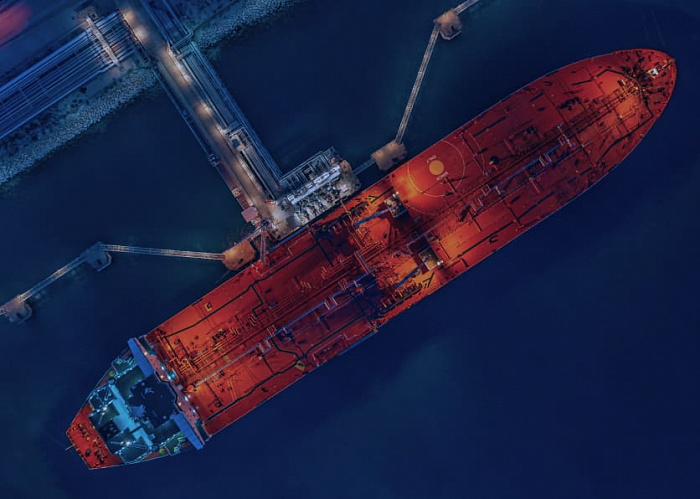
In 1976-1977, the domestic fleet was expanded by a series of Yurmala-type gas carriers with a carrying capacity of 12,000 m3, and in 1979 by even larger Smolny-type (37,000 m3) and Mossovet-type (75,000 m3) gas carriers, designed for liquefied ammonia and petroleum gases. At the same time, the international maritime community recognized a new type of vessel, the lighter carrier, as extremely promising, and at the end of the Tenth Five-Year Plan period (1976-1980), the first lighter carriers, “Julius Fucik” and “Tibor Samueli”, joined the Soviet merchant fleet. Specialized vessels for transporting large-scale and heavy cargoes were also among the fundamentally new vessel types adopted by the Soviet shipping companies.
1971-1990
The passenger fleet for local and international routes developed rapidly, and in terms of the “white fleet” tonnage, the country moved to the forefront of the world. Prominent in cruise shipping were comfortable passenger ships such as “Maxim Gorky”, “Leonid Sobinov”, “Alexander Pushkin”, “Mikhail Kalinin”, and others.
Domestic shipbuilding achieved significant successes, and its capabilities expanded. In 1975, the first domestic large-tonnage tanker “Krym”, with a carrying capacity of 150,000 tons, was built.
Despite all the problems, the period from 1970 to 1990 saw considerable growth in the cargo turnover of the USSR seaports. From 365.9 million tons in 1970, this key indicator of maritime transport performance increased to 392.6 million in 1980, reaching its maximum of 456.0 million tons in 1984, and then, amid the economic restructuring that had begun in the country and the looming economic crisis, fell to 403.4 million tons in 1990.
The Soviet Union's foreign economic cooperation with other countries entered a new stage of development and was accompanied by a rapid expansion of its maritime communications. Due to the growth of global trade – especially maritime relations with socialist countries – and the enhanced capabilities of the merchant fleet, the share of foreign shipping increased.
At the same time, the share of cargo transportation between foreign ports rose, and the merchant fleet transformed from a means of ensuring the national supply chain into an instrument for obtaining foreign currency.
1971-1990
Scientific research in the maritime sector became increasingly focused on complex, industry-wide issues, driven by emerging trends and challenges. The development of modern forms of fleet operation on shipping routes and directions intensified. Technical and operational justifications for newly built vessels became more complex, considering the actual cargo base and influencing factors. Much greater attention was paid not only to forecasting technical fleet development, but also to studying prospects for maritime transport development using mathematical modeling methods. Comprehensive standardization was introduced to ensure the safety and security of maritime cargo transportation.
All CNIIMF departments recorded a growing number of successful research projects with their further practical implementation. In 1970, for example, the Navigation Sector carried out significant work on the preparation and substantiation of Soviet proposals for revising the international Regulations for Preventing Collisions at Sea (COLREGS). These materials were submitted to the Inter-Governmental Maritime Consultative Organization (IMCO, now IMO) and formed the basis for the new COLREGS adopted at the 1972 international conference.
The average total number of employees at the Institute (including branches) was 1,069 in 1977, of whom 779 were based in Leningrad. Between 1971 and 1977, this number increased by 206 due to the development of regional “basin” divisions, whereas the growth at Leningrad headquarters remained relatively stable at 790-800 people. The staff included 149 people with academic degrees (4 Doctors and 145 Candidates of Science). The main source of new scientific personnel was the Institute's own postgraduate program, which produced 55 Candidates and 6 Doctors of Science between 1971 and 1977. As of the end of 1977, there were 84 postgraduate students, 38 of whom were enrolled in a full-time program.
1971-1990
CNIIMF's high scientific potential enabled effective research and development across many fields simultaneously, as well as their subsequent industrial application. On average, between 63 and 72 research topics were developed per year.
Based on the Institute's work, fleet replenishment programs were formulated for the Tenth and Eleventh Five-Year Plans, defining the main characteristics of newbuild vessels, areas of fleet specialization, and their economic feasibility.
CNIIMF, in collaboration with shipping companies and basin design and construction organizations, developed a fundamentally new continuous fleet maintenance system, which, when adopted across the fleet, significantly extended the operational life throughout the industry.
A new Statute of Service for Vessels was developed, defining new work organization standards for seafarers, standard staffing levels, and staffing norms for all fleet types. Safety regulations for merchant vessels were also drafted and subsequently enacted. These efforts determined the work and rest regimes for vessel crews.
The research and development plan for 1976-1980 tasked CNIIMF with the feasibility study for the development of all fleet types. In this regard, a new large department of economic research and fleet development modelling, comprising five sectors, was formed. The Board of the Ministry of the Maritime Fleet subsequently approved the Institute’s comprehensive feasibility studies for the construction of 48 ship types during the Eleventh Five-Year Plan (1981-1985).
1971-1990
The 1980s was a period of intensified scientific research at the Institute and the introduction of progressive working methods and technologies. CNIIMF provided scientific and technical support for the procurement of next-generation vessels. Unique developments by the Institute's specialists were linked to the USSR's successes in space exploration, i.e., an automated navigation and communication complex using Earth’s artificial satellites (such as the international COSPAS-SARSAT search and rescue satellite system) and a maritime satellite communication system based on the INMARSAT space segment.
In 1979, marking its 50th anniversary, CNIIMF was awarded the Order of the Red Banner of Labour by decree of the Presidium of the Supreme Soviet of the USSR in recognition of its scientific and production achievements.
CNIIMF was assigned the leading role in the industry for the development of long-term strategies and industry programs for the Baltic and Northern Basins, as well as the Western Arctic regions.
1991-2000
CNIIMF under New Economic Conditions
After the collapse of the USSR, the country faced great difficulties in the economic, social, and political spheres. The economic management system was disrupted at all levels. Almost simultaneously, the “shock” transition from a planned-administrative model to a market-based management system began. From the early 1990s, all sectors of the formerly unified national economy underwent massive upheavals.
The consequences of these global events for the maritime transport of the Russian Federation were comparable to the losses suffered by the country twice before – in 1914-1920 and 1941-1945 – due to the Civil War and the two World Wars. Thus, for the third time in its history, CNIIMF, as the lead scientific institution of the industry, faced the urgent challenge of reviving domestic merchant fleet.
Following the division of the USSR's merchant fleet, based on the registration of ships with shipping companies located in the newly independent former Union republics, Russia retained slightly more than half of the total Soviet deadweight tonnage. Due to existing differences in the specialization of shipping companies focused on transportation of cargoes, the Russian merchant fleet lost a significant number of vessel types. For example, three Ukrainian shipping companies took over a significant share of the newer Soviet fleet tonnage: bulk carriers, container ships, roll-on/roll-off (Ro-Ro) ships, ferries, multipurpose general cargo vessels, cruise ships, and small passenger vessels. Ukraine also inherited the research fleet. Almost the entire refrigerated fleet of the former USSR was concentrated in Latvia’s shipping company. The structural composition of the vessels remaining in Russia did not match the country's new foreign trade needs, and the average age of the vessels was 17 years. The loss of the former ship repair base also created difficulties for the industry.
1991-2000
A sharp decline in production, combined with the severance of interregional ties and trade relations with many foreign partners, led to a severe downturn in the country's seaport sector. During the first half of the 1990s, cargo turnover at Russian ports fell by almost 40%.
In response to the challenging situation in the maritime industry, a federal target program, ”Revival of the Russian Merchant Fleet”, was adopted for the period 1993-2000. Immediate implementation issues prompted its revision in 1996 and a reduction of the program's targets by almost half. Nevertheless, due to weak state funding, even the corrected version was only partially implemented. The port sector saw only 29% completion, which was achieved through the reconstruction of the existing facilities rather than new construction.
The radical economic reforms of 1990s initially weakened the county’s scientific potential due to cuts in state funding for research. Around 800 institutes ceased to exist during those years, leading to the demise of the concept “industry-specific science”.
CNIIMF was affected by the overall negative consequences: a massive outflow of personnel from the Institute to more lucrative business areas, the emigration of experienced and even young specialists, and a sharp drop in demand for new ship designs, among others.
The reforms called for the corporatization of research institutions and their transition to extrabudgetary financing. The primary option for restructuring unitary enterprises at the time was their transformation into joint-stock companies with 100% state ownership.
1991-2000
The Closed Joint-Stock Company “Central Marine Research & Design Institute” was established on 22 February 1993 in accordance with the applicable legislation of the Russian Federation by transforming a leasehold enterprise into a joint-stock company. The founders of the Company were members of the workforce of the leased enterprise.
Throughout the 1990s, while maintaining full legal succession, the Institute underwent several organizational changes and, since 08 July 2015, became known as the Joint-Stock Company “CNIIMF” (CNIIMF).
Effective management and staff dedication fully stabilized the Institute, adapting its scientific departments to modern demands and securing substantial R&D funding.
2001 - 2024
- The Testing Centre operates as a fully-fledged laboratory that assesses all types and classes of transport packaging (including boxes, barrels, drums, bags, flasks, and canisters) for compliance with national and international regulations on the transportation of dangerous goods, and studies the transport characteristics and properties of cargoes.
- In October 2006, with the support and technical supervision of the Russian Maritime Register of Shipping (RS), CNIIMF established an Emergency Response Service (ERS), which currently operates as the Coastal Centre of Maritime Safety Information Support, providing round-the-clock technical support to vessels in respect of damaged stability and residual structural strength calculations.
- In accordance with Order No. A-4597 of the Federal Accreditation Service dated 23 July 2015, a certification body for products, works, and services was established and is in operation at CNIIMF (Accreditation Certificate No. RA.RU.11МФ01).
- In 2016, by decision of the Department of Labour Conditions and Occupational Safety, CNIIMF was entered in the register of organizations authorized to conduct special assessment of working conditions; and performs as the Industry Scientific and Methodological Centre for Occupational Safety in Maritime Transport.
- In 2017, on the basis of the Institute, the Technical Committee for Standardization in Maritime Transport – TK-318 “Morfloot” – was established and is currently operational (Order No. 1324 dated 16 June 2017 of the Federal Agency for Technical Regulation and Metrology).
2001 - 2024
- CNIIMF has been authorized as a Qualification Assessment Centre. Accordingly, “Assessment Tools” for the qualification of “Docker-mechanic of a comprehensive brigade for cargo handling operations in sea and river ports” (Grades 1-4) have been developed, coordinated, and approved in accordance with the established procedure by the National Agency for the Development of Qualifications and the Council for Professional Qualifications in Maritime and Inland Water Transport.
- In 2023, CNIIMF successfully passed the selection by the Ministry of Industry and Trade of the Russian Federation as an expert organization and was included in the list of organizations authorized to perform verification (expert review) of cost estimates for ship construction, as well as the prices of ship design, construction, repair, and recycling.
- CNIIMF holds valid Certificates of the Russian Maritime Register of Shipping confirming the compliance of the Institute’s management system with the international standards. Currently, the management system meets all functional and organizational requirements of the ISO 9001:2015 and GOST R ISO 9001–2015 standards. The Institute's Quality Management System has been in operation since 15 December 1998.
Conducting research and developing process documentation to ensure the safe transportation of various cargo types by sea
Designing, technical operation of water transport, occupational safety and health
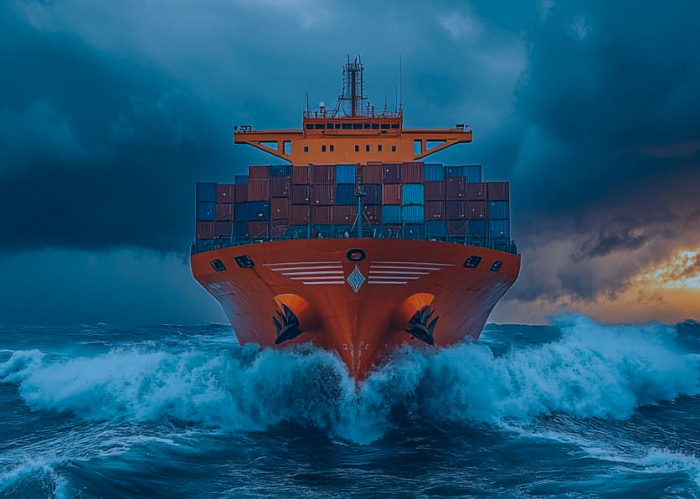
Maritime safety

Development, economics, and ecology of maritime transport
Technical regulation, quality management, scientific and technical information

Certification, training, assessment of professional qualifications in maritime and inland waterway transport
Our projects
Подробнее >>
Подробнее >>
Подробнее >>
Подробнее >>
Подробнее >>
Contacts
10, Stavropolskaya Str., St.-Petersburg, 191124, Russia
3 Block 1, Mezhevoy Canal, St.-Petersburg, 198035, Russia
Contacts